How often should I actually water my plants?
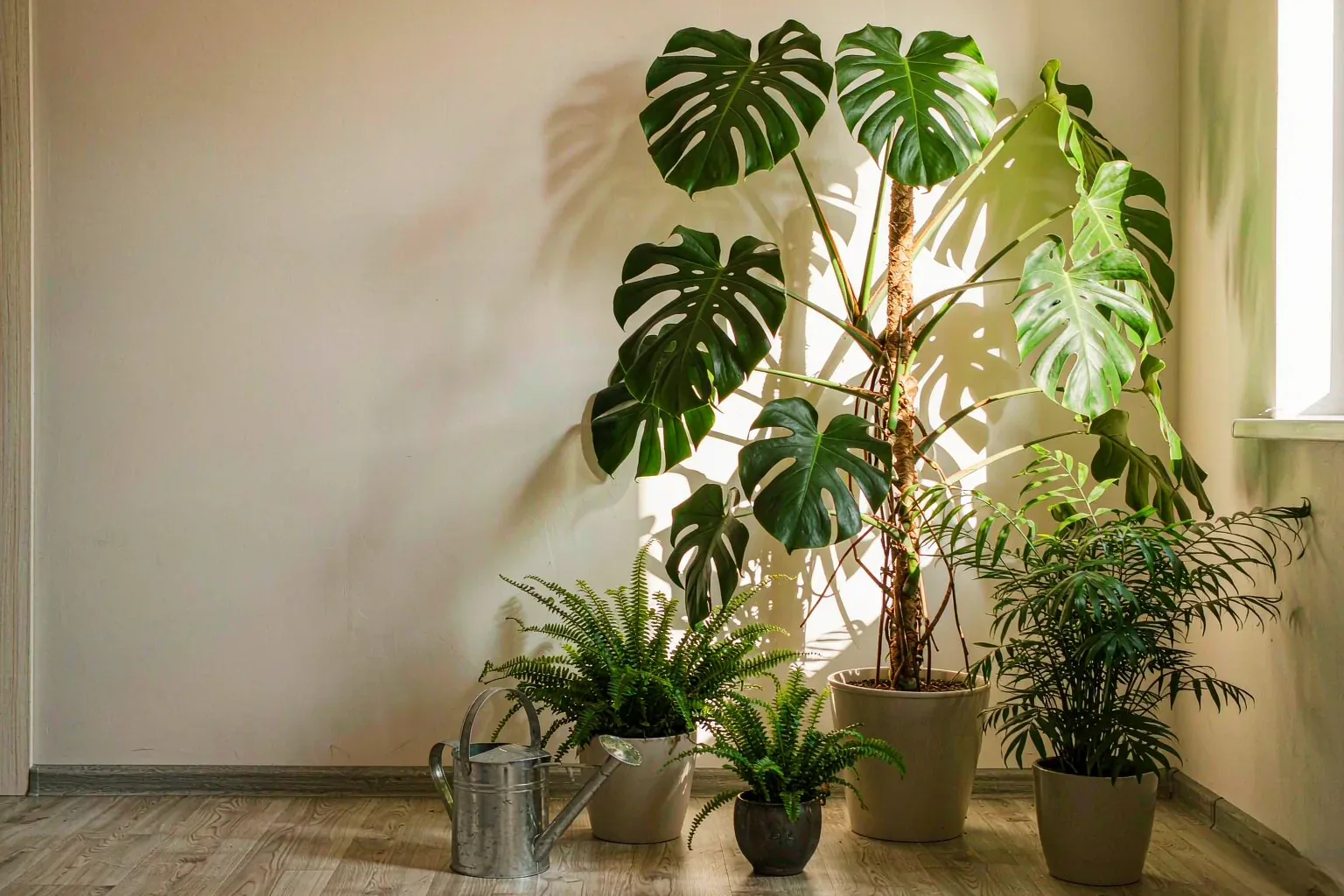
If there's one question we hear more than any other at the shop, it's this one. And the honest answer is a little frustrating: there's no fixed schedule. "Once a week" is a myth that kills more houseplants than almost anything else.
Water needs depend on the plant, the pot, the soil, the season and the weather in your home. A fern in a small pot in a warm, dry room might want water every few days. A snake plant in a cool corner might be fine for three weeks. The trick is to stop watching the calendar and start watching the plant.
The finger test
This is the method we teach in the shop because it's simple and it works. Push a finger about two centimetres into the soil.
- If it feels dry all the way to that depth, it's time to water.
- If it still feels damp, wait and check again in a couple of days.
- For succulents and cacti, wait until the soil is dry right through — they'd rather be too dry than too wet.
You can also lift the pot. A dry pot is noticeably lighter than a wet one, and after a while you'll learn the weight of your own plants. Wooden skewers work too: push one in, pull it out, and see if it comes up damp.
How to water properly
When you do water, water thoroughly. Pour slowly over the soil until a little runs out of the drainage hole, then empty the saucer. This encourages deep roots and washes out accumulated salts. A tiny splash every day only wets the surface and leaves the roots below thirsty — and that's a common cause of the dreaded dry, crispy leaf tips.
Use room-temperature water where you can. Very cold water can shock a warm root ball, especially for tropical plants. And if your tap water is hard, leaving it to stand overnight or using rainwater makes a real difference over time for sensitive plants like calatheas.
When in doubt, wait
Most houseplants cope far better with being a little too dry than a little too wet. Overwatering is the number one cause of root rot, which is difficult to reverse. If you're genuinely unsure, another day or two rarely hurts. Your plant will tell you when it's thirsty — you just have to learn its voice.
Still not sure about a particular plant? Drop us a line with a photo and we'll help you work it out.